
A truck accident in North Texas raises questions most people never had to think about before: who is actually responsible, what a “black box” records, and why the trucking company already has people working on the case.
The answers matter because a commercial truck claim operates under different rules, different insurance, and a much shorter window for preserving evidence than a typical car crash.
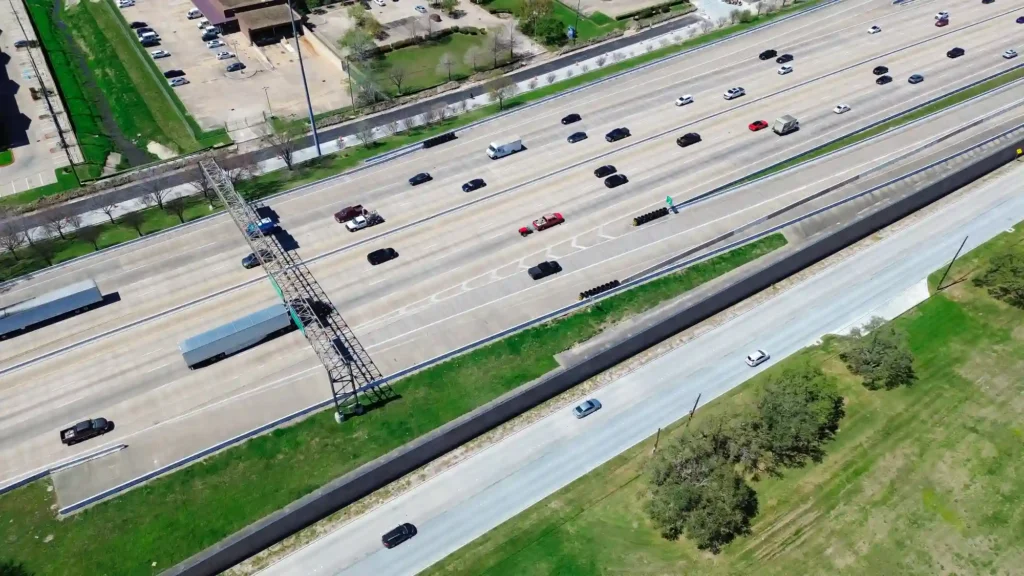
Freight moves through our region around the clock on I-35E, I-35W, I-20, I-30, I-45, and US-287, and the distribution hubs south of Dallas and around Alliance in north Fort Worth keep those roads full of 18-wheelers, including the fast-growing corridors where we handle McKinney truck accident claims.
Below are straight answers to common questions we hear most often from people hurt in truck accidents in North Texas.
Key Takeaways about Common Questions that Arise After a Truck Accident in North Texas
- Commercial truck claims are governed by federal safety rules as well as Texas law.
- Liability can extend beyond the driver to the motor carrier, a freight broker, a shipper or loader, or a maintenance company.
- Electronic logging devices and engine data can show hours driven, speed, and braking, but some records only have to be kept for six months.
- Trucking companies and their insurers often send rapid-response teams to the scene soon after a serious crash.
- Texas generally allows two years to file a personal injury or wrongful death lawsuit.
What Are the Most Important Things to Know After a Truck Accident in North Texas?
After a truck accident in North Texas, the most important things to know are that a truck claim can involve several responsible companies, that the key evidence is electronic and can be lost within months, and that the trucking company’s insurer usually starts investigating right away. Texas generally gives you two years to file a lawsuit, but waiting that long can cost you the evidence.
What Should You Do at the Scene of a Truck Accident?
Your first priorities at the scene are medical care and a police report, and after that, preserving what you can. If you are able, a few steps can protect a claim later:
- Call 911 and accept medical evaluation, even if you feel all right. Adrenaline hides injuries.
- Photograph the truck, including the company name, the USDOT number on the cab door, the trailer number, and the license plates.
- Take photos of all vehicles, the road, skid marks, and any spilled cargo.
- Get names and numbers from witnesses before they leave.
- Do not speak to anyone but the police about fault.
That last point matters more in truck cases than in almost any other kind of crash. The people who show up to “help” may be working for the trucking company.
Why Is a Truck Accident Claim Different From a Car Accident Claim?
A truck accident claim is different because commercial trucking is a regulated industry with its own safety rules, its own records, and much larger insurance policies.
Interstate motor carriers must follow the Federal Motor Carrier Safety Regulations, which cover driver qualifications, hours of service, vehicle maintenance, drug and alcohol testing, and cargo securement.
Those rules create a paper and data trail that simply does not exist in a crash between two private cars. When a company breaks one of them, the violation can become powerful evidence of negligence.
Higher Insurance, Harder Fights
Federal rules require interstate carriers hauling general freight to carry at least $750,000 in liability coverage, and more for hazardous materials. Larger policies mean the carrier and its insurer have more at stake, and they defend these claims accordingly.
What Types of Truck Crashes Happen on North Texas Highways?
Truck crashes tend to follow a handful of patterns, and each one points toward different evidence and different responsible parties. These are the types we see most often on North Texas freight corridors:
- Rear-end collisions. A loaded 18-wheeler needs far more distance to stop than a passenger car, so a following truck driver who is speeding or distracted can plow into slowed traffic on I-35E or I-20.
- Jackknife crashes. When a trailer swings out at an angle to the cab, often after hard braking or on wet pavement, it can block several lanes at once.
- Underride crashes. A car that slides under the side or rear of a trailer can suffer devastating damage to the passenger compartment.
- Blind-spot and lane-change crashes. Large trucks have wide blind zones along both sides and behind the trailer, and unsafe merges are common at busy interchanges.
- Wide-turn crashes. Trucks swinging wide at intersections and distribution center entrances can trap cars in the gap.
- Rollovers and cargo spills. Taking a ramp too fast or hauling a shifted load can tip a trailer or drop cargo across the road.
The crash type often hints at the cause. A rollover may raise questions about loading, while a rear-end crash may point to fatigue or hours-of-service violations, which is why we look at the pattern before deciding which records to request first.
Who Can Be Held Liable for a Truck Accident in North Texas?
More than one party can be responsible for a North Texas truck accident, and identifying all of them often determines how much insurance is available. Depending on the facts, liability may reach:
- The truck driver, for speeding, fatigue, distraction, impairment, or unsafe lane changes
- The motor carrier, which is generally responsible for its drivers’ conduct on the job and for its own hiring, training, and scheduling decisions
- A freight broker, in some cases, if it carelessly selected an unsafe carrier
- The shipper or loader, if improperly loaded or secured cargo shifted or fell
- A maintenance company, if faulty brake, tire, or lighting work played a role
Broker liability in particular is contested, and courts do not all agree on when a broker can be held responsible.
Under Texas’s proportionate responsibility rules, each party’s share of fault matters, so leaving a responsible company out of the claim can reduce what you recover.
What Is a Truck’s “Black Box,” and Why Does It Matter?

A truck’s “black box” usually refers to the electronic data systems that record how the truck was driven, including the engine control module and the electronic logging device.
Together, they can show speed, braking, throttle position, and how many hours the driver has been on duty.
Electronic logging devices, or ELDs, are required for most interstate drivers who must keep hours-of-service records.
The federal hours-of-service rules limit property-carrying drivers to 11 hours of driving within a 14-hour window after 10 consecutive hours off duty, among other limits. A log showing a driver pushed past those limits is strong evidence of fatigue.
The Evidence Problem
Federal rules require carriers to keep hours-of-service records and supporting documents for only six months. Engine data can be overwritten as the truck keeps running, and a damaged tractor can be repaired and put back on the road.
Other records we look for include:
- Driver qualification files, including licensing, medical certification, and driving history
- Drug and alcohol testing records
- Inspection, repair, and maintenance records
- Dispatch records, bills of lading, and fuel and toll receipts that confirm where the truck was
- Dashcam and forward-facing camera video from the truck
This is why we send preservation letters to the carrier as early as possible, putting it on notice that the evidence must be kept.
Why Is the Trucking Company Already Investigating?
Many trucking companies and their insurers use rapid-response teams that can reach a serious crash scene within hours, sometimes before you leave the hospital.
These teams can include investigators, adjusters, and defense lawyers, and their job is to protect the company.
Insurance companies are not on your side, no matter what they tell you. If someone from the trucking company or its insurer calls you, you do not have to give a recorded statement, and anything you say can be used to shift fault onto you.
When you hire us, those calls come to our attorneys.
What Compensation Is Available After a Truck Accident?
A truck accident claim in Texas can seek compensation for the full range of losses the crash caused, not just the first hospital bill.
Depending on the facts, that can include past and future medical care, lost wages and lost earning capacity, physical pain and mental anguish, physical impairment, disfigurement, and property damage.
When a truck crash takes a life, surviving family members may bring a wrongful death claim, and the estate may bring a separate survival claim for what the person suffered before death.
In rare cases involving gross negligence, such as a carrier knowingly putting a dangerous driver on the road, Texas law can allow exemplary damages based on clear and convincing evidence.
Every claim is different, and its value depends on the injuries, the evidence, and the insurance available.
How Long Does a North Texas Truck Accident Claim Take?
A truck accident claim can take anywhere from several months to a few years, depending on how serious the injuries are, how many companies are involved, and whether liability is disputed.
Claims usually cannot be valued fairly until your doctors understand your long-term condition.
Cases that settle often do so after the evidence has been gathered and the medical picture is clear. Cases that go to trial take longer, and a lawsuit may be needed to force a carrier to produce records it would rather keep.
The Legal Deadline
Under Texas Civil Practice and Remedies Code Section 16.003, most personal injury lawsuits must be filed within two years of the crash, and wrongful death lawsuits within two years of the death.
Exceptions exist, and claims involving a government-owned vehicle can have much shorter notice requirements.
FAQs about Truck Accidents in North Texas
Here are a few more questions people ask us after a commercial truck crash.
How do I find out who owns the truck that hit me?
The USDOT number painted on the truck’s cab can be looked up in the Federal Motor Carrier Safety Administration’s public records to identify the registered motor carrier. The crash report may also list the carrier, and the tractor and trailer can belong to different companies.
Can I sue the trucking company and not just the driver?
Yes, in many Texas truck accident cases, the motor carrier can be held responsible for a driver who was working at the time of the crash. The carrier can also be responsible for its own negligence, such as hiring an unqualified driver or skipping required maintenance.
What if the truck driver says I caused the crash?
Texas uses proportionate responsibility, so you can still recover if you are found 50 percent or less at fault, with your recovery reduced by your share. Electronic truck data and video often test a driver’s version of events against what actually happened.
Are 18-wheeler settlements larger than car accident settlements?
Truck claims often involve more serious injuries and larger insurance policies, but no settlement amount is typical or assured. The value of any Texas truck accident claim depends on the injuries, the evidence of fault, and the coverage available.
Do Texas intrastate trucks follow the same rules as interstate trucks?
Not always, because Texas has its own motor carrier rules for trucks that operate only within the state, and those rules largely track the federal regulations with some differences. Whether a truck was operating interstate or intrastate can affect which records and insurance minimums apply.
What if I was hit by a delivery van or box truck instead of an 18-wheeler?
Many delivery vans and box trucks in Texas are commercial vehicles too, and the company that employs the driver may be responsible for the crash. Depending on the vehicle’s size and use, some federal or state commercial vehicle rules may still apply.
Can I get the truck’s electronic data myself?
Usually not, because the motor carrier controls a truck’s electronic logging and engine data, and it has no obligation to hand those records to an injured person on request. A preservation letter and, if needed, formal requests in a lawsuit are the normal ways to obtain them in Texas.
Talk With Our Truck Accident Attorneys Before the Evidence Disappears
The trucking company started protecting itself the day of the crash. At Tate Law Offices, PC, our attorneys work to preserve the truck data, identify every responsible company, and handle the insurers while you focus on recovery.
We are available 24/7, your consultation is free, and there is no fee unless you collect. Call (972) 499-4813 to get your free consultation. Every case turns on its own facts, and we will give you an honest look at yours.
