

Nationally, about one in seven drivers carries no liability insurance at all, and roughly one in three is either uninsured or carrying limits too thin to cover a serious crash.
That matters the moment someone without coverage runs a red light and hits your car, because the insurance system built to compensate you after a crash depends entirely on the other driver actually having a policy.
Uninsured motorist coverage in Texas exists specifically to close that gap, and it is worth understanding before you ever need it, not after.
Key Takeaways:
- The Insurance Research Council estimated the national uninsured driver rate at 15.4 percent in 2023, with one in three drivers either uninsured or underinsured.
- Texas insurers must offer uninsured and underinsured motorist coverage on every auto policy sold in the state.
- A driver must reject this coverage in writing for it to be excluded from a policy.
- When the at-fault driver is never identified, Texas requires actual physical contact with the unknown vehicle before uninsured motorist coverage applies.
- Texas policy forms must cap uninsured and underinsured motorist recovery at the limit stated in the policy, regardless of how many vehicles that policy covers.
How Common Is Driving Without Insurance?
Uninsured driving is common enough that every Texas driver should assume it can happen to them.
The Insurance Research Council put the national uninsured motorist rate at 15.4 percent in 2023, and found that one in three drivers was either uninsured or underinsured.
A driver crossing a busy intersection in Dallas or Fort Worth has a real, non-trivial chance of colliding with someone who cannot cover what they cause.
Some drivers let a policy lapse and keep driving anyway. Others buy the state minimum, cancel after the required proof-of-insurance period passes, and never renew.
Texas uses an electronic verification system tied to vehicle registration, but gaps still show up between when a policy lapses and when the system catches it.
A driver technically carrying insurance is not the same thing as a driver carrying enough insurance, and Texas has not raised its minimum liability requirement since 2011, even as medical and repair costs have climbed substantially.
A driver who is “insured” on paper can still leave you with a meaningful shortfall.
What Uninsured Motorist Coverage Actually Pays For
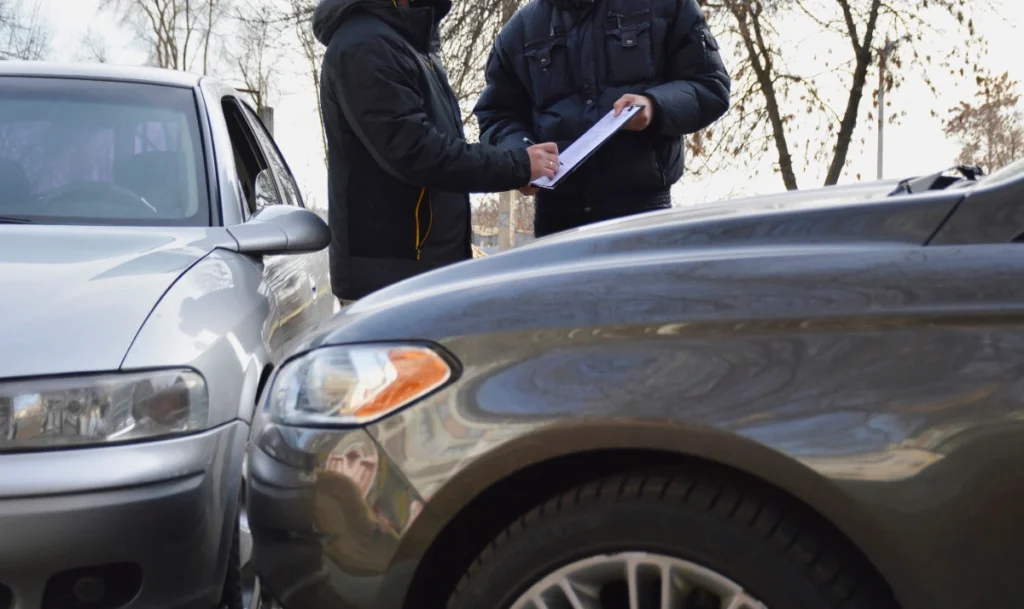
Uninsured motorist coverage, often shortened to UM, pays when the driver who caused your crash carries no liability insurance at all.
It typically splits into two parts: bodily injury coverage, which pays for medical bills, lost income, and pain and suffering, and property damage coverage, which pays for vehicle repairs or the total loss.
Texas insurers must offer UM coverage at limits matching whatever liability limits you carry, under Texas Insurance Code Section 1952.101.
A driver carrying 100/300 in liability coverage is generally offered the same 100/300 in UM coverage unless they specifically choose a different amount or reject it entirely.
Texas law does not require you to buy this coverage the way it requires liability insurance. It requires the insurer to put it on the policy unless you sign it off.
Section 1952.101(c) is explicit that the coverage does not apply only “if any insured named in the insurance policy rejects the coverage in writing,” so a verbal decision or an unchecked box during a phone call does not remove it.
Under Section 1952.102, a vehicle also counts as uninsured when the other driver had liability insurance, but that insurer became insolvent and cannot pay. A policy that existed on paper is not the same as a policy that pays.
Does UM Cover a Hit-and-Run or a Phantom Vehicle?
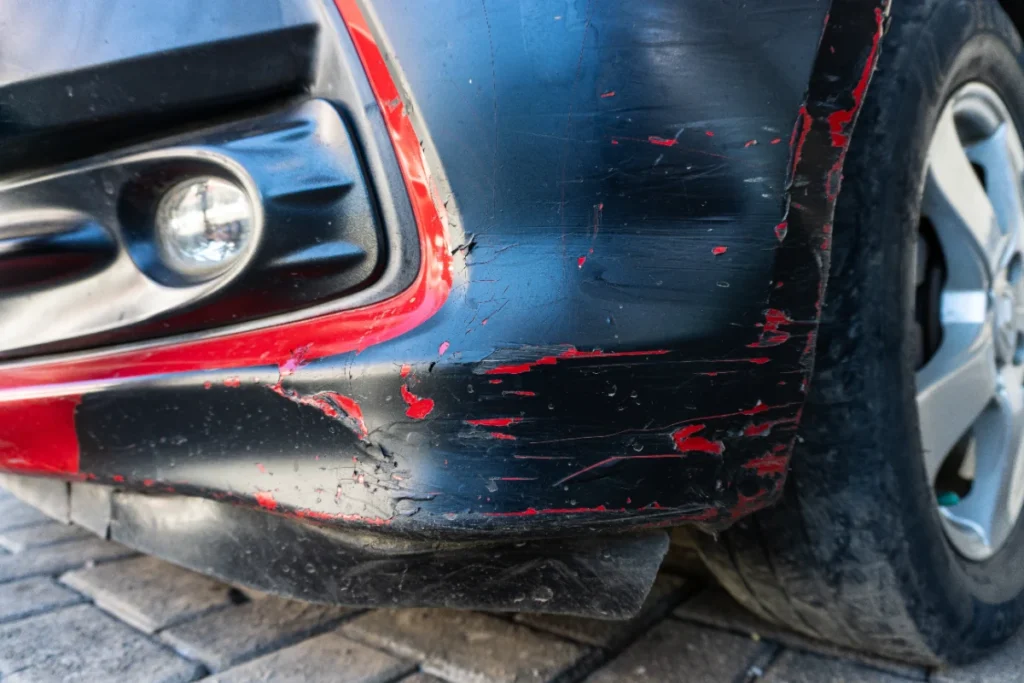
It covers a hit-and-run, and it usually does not cover a true phantom vehicle; the difference is a single statutory word: contact.
Texas Insurance Code Section 1952.104 requires every UM policy form to provide that where the owner or operator of the at-fault vehicle “is unknown, actual physical contact must have occurred between the motor vehicle owned or operated by the unknown person and the person or property of the insured.”
A driver who struck your car and fled meets that requirement. An unidentified vehicle that forced you off the road without ever touching your car does not.
That rule turns on the driver being unknown, which leaves an opening.
If the vehicle that ran you off the road is later identified and turns out to be uninsured, the physical contact requirement no longer stands in the way, because the operator is no longer unknown.
Identifying that driver can be the difference between a claim and no claim.
These claims require more documentation than a standard UM claim. A police report filed promptly, witness statements, dashcam footage, and physical evidence from the scene all become more important when there is no other driver to point to.
Waiting even a day or two to report a hit-and-run can weaken a claim that would otherwise be straightforward.
Where contact did occur, but the driver fled, the evidence question shifts to proving that another vehicle was involved at all.
Independent corroboration matters here more than in almost any other type of UM claim, whether that comes from a witness who saw the other vehicle, paint transfer and damage patterns consistent with a struck vehicle, or debris recovered at the scene.
What’s the Difference Between UM and UIM Coverage?
Uninsured motorist coverage applies when the at-fault driver has no insurance whatsoever. Underinsured motorist coverage, or UIM, applies when the at-fault driver has a policy, but the limits are too low to cover what you actually lost.
A driver carrying the Texas minimum of $30,000 per person in liability coverage can cause a crash serious enough to generate $150,000 in medical bills. Their insurer pays the $30,000 limit and stops there.
UIM coverage, addressed under Section 1952.106 of the Texas Insurance Code, is what allows an injured driver to pursue their remaining damages through their own policy.
A car accident lawyer reviewing a crash like this checks the at-fault driver’s limits early, since it determines whether a UIM claim belongs in the plan at all.
UIM claims carry a requirement that catches most people off guard, and it is unique to how Texas handles this coverage.
Your own insurer owes nothing on a UIM claim until you obtain a judgment establishing that the other driver was liable and establishing the amount of your damages.
Settling with the at-fault driver’s insurer and then sending a demand does not trigger payment, which is why a UIM claim that looks simple can take far longer than a straightforward liability claim.
The Texas Supreme Court has since confirmed that an insured can meet that requirement through a declaratory judgment action against their own insurer, which is a suit asking the court to decide the other driver’s fault and the amount of their damages rather than to order immediate payment.
That route also puts attorneys’ fees on the table at the court’s discretion.
There is also a math step most drivers do not expect. Section 1952.106 limits UIM payment to the policy limit “reduced by the amount recovered or recoverable from the insurer of the underinsured motor vehicle.”
The UIM carrier gets a credit for the amount the at-fault driver’s insurance paid out. If a driver with $100,000 in UIM coverage already recovered $30,000 from the at-fault driver’s policy, the UIM carrier gets a credit of $30,000.
The driver would need to show damages of $130,000 to collect all of the UIM $100,000 policy limit.
Note the word “recoverable.” Settling with the at-fault driver for less than the available limits does not preserve the difference, because the offset is measured against what could have been recovered, not only what was.
Why Multiple Vehicles Usually Do Not Multiply Your Coverage
A common assumption is that a household insuring three cars on one policy has three sets of UM limits available after a serious crash. Texas policy forms are written to prevent exactly that.
Section 1952.104 requires the policy form to provide that “regardless of the number of persons insured, policies or bonds applicable, vehicles involved, or claims made,” the total limit of liability to any one person from a single occurrence “may not exceed the limit of liability for those coverages as stated in the insurance policy.”
Three vehicles at 50/100 on one policy does not become 150/300.
Whether limits under genuinely separate policies can be combined is a different and much more contested question. That one is answered by reading the actual policies, not by a general rule.
What every household can do now is check whether the single limit stated on the declarations page is actually enough.
Why a UM Claim Still Takes Work
UM and UIM claims are first-party claims, meaning they run through your own insurer rather than the at-fault driver’s. Many drivers assume that makes the process friendlier.
In practice, it is still a claim you have to prove and a claim an insurance company would rather not pay.
A first-party claim is evaluated against the policy, and the categories that get examined are the same ones any injury claim faces: how the crash happened, what the treatment record shows, and how much of the claimed loss traces to this collision rather than something earlier.
Some policies also include a consent-to-settle clause, requiring you to get the insurer’s approval before settling with the at-fault driver’s insurer, and settling without that consent can put the UIM claim itself at risk.
The venue is set by statute on these claims, which is unusual.
Under Section 1952.110, an action against an insurer over this coverage may be brought only in the county where the policyholder lived at the time of the accident, or the county where the accident occurred.
Across our service area, that means Dallas, Tarrant, Collin, Denton, or Grayson County, and it is not a choice the insurer gets to make.
Many UM and UIM policies also include an arbitration clause setting out how a dispute over the amount owed gets resolved.
That can mean binding arbitration, where a neutral decision-maker’s ruling is final, non-binding arbitration, where either side can reject the result and go to court, or a suit against your own insurer.
What Happens If You Never Sign a Rejection Form?
If you cannot recall ever signing a written rejection of UM or UIM coverage, there is a strong chance the coverage sits on your policy right now.
The rejection has to be a specific, signed document, not an inference drawn from a conversation or an assumption based on your premium.
Pulling your declarations page, the summary sheet listing your coverages and limits, or asking your insurer directly for a copy of any signed rejection on file, is the fastest way to confirm what you actually have.
Drivers are sometimes surprised to find UM/UIM protection they never knew they had.
FAQs: Uninsured Motorist Coverage in Texas
Drivers reviewing this coverage for the first time tend to land on the same set of questions about how it works in practice.
Does Texas require me to carry uninsured motorist coverage?
No. Texas requires insurers to offer it, but drivers can reject it in writing.
Most drivers who never signed a rejection carry it on their policy without realizing it.
Can I use UM coverage if I was a passenger, not the driver?
Yes, in most cases. UM and UIM coverage typically extends to passengers in the insured vehicle.
Whether it reaches a pedestrian depends on the specific policy language and is worth confirming rather than assuming.
What if the at-fault driver had some insurance but let it lapse right before the crash?
This is generally treated as an uninsured driver situation. A policy that had lapsed by the time of the crash means no coverage was in force.
Does filing a UM claim affect my insurance premium?
Rules vary by carrier, and Texas does not categorically prohibit rate increases tied to a not-at-fault UM claim. Ask your agent about your specific policy terms.
Can I still sue the uninsured driver directly instead of using UM coverage?
Yes, though a judgment against a driver with no insurance and no significant assets often has little practical value. That is exactly why UM coverage exists.
What if my UM claim gets denied?
A denial is not automatically final. Disputes over UM and UIM claims can proceed to arbitration or to court, depending on what the policy provides, rather than ending with the insurer’s first decision.
Find Out What Your UM Coverage Actually Covers
If you were hit by a driver with no insurance, or insurance too small to cover what you lost, our attorneys at Tate Law Offices, PC, can review your policy and explain exactly what coverage applies to your crash.
We handle the claim against your own insurer with the same attention we bring to any other case, so a first-party claim does not end up treated like an afterthought.
Call (972) 499-4813 for a free consultation, available 24/7 across Dallas, Fort Worth, Denton, Sherman, and McKinney. There is no fee unless you collect.
