

The most dangerous intersections in Dallas are not a mystery to the city. Dallas uses state crash records to map the small set of streets where people are killed or seriously hurt most often, and it has started spending safety money on specific crossings along those streets.
Knowing where the Dallas car accident hotspots are can help you stay alert on your daily drive. If you were already hit at one of these spots, the intersection itself can become evidence in your claim, and you can count on the insurance company studying it to find a reason to blame you.
If you were hurt in a crash at a Dallas intersection, our Dallas car accident attorneys can review what happened for free and explain your options for seeking compensation.
Key Takeaways about the Worst Intersections in Dallas, TX
Here are the points that matter most if you drive, walk, or were hurt at one of these locations:
- Dallas’s High Injury Network covers about 7% of city streets but accounts for more than half of the fatal and severe-injury crashes on city roads.
- Southern Loop 12, Maple Avenue, Lake June Road, Ferguson Road, and Camp Wisdom Road are among the corridors the city has prioritized for safety work.
- City figures show fatal crashes fell about 19% citywide from 2024 to 2025 and about 52% on Loop 12.
- Signal timing, sightlines, and nearby video can decide who is found at fault, and Texas bars recovery when an injured person is more than 50% responsible.
- Most Texas injury lawsuits must be filed within two years, and claims involving a government entity can require notice within six months or less.
Each of these points carries the most weight in the first few weeks after a crash, while evidence is still easy to find.
What Are the Most Dangerous Intersections in Dallas?
The most dangerous intersections in Dallas sit on the city’s High Injury Network, including crossings along southern Loop 12, Maple Avenue at Hawthorne Avenue, Lake June Road, Ferguson Road, and Camp Wisdom Road.
Where Are the Most Dangerous Intersections in Dallas Right Now?
Dallas does not publish a ranked list of individual intersections. Instead, the city maps its Vision Zero High Injury Network, the streets where fatal and severe crashes concentrate, and names the corridors and crossings it has chosen to study or rebuild.
Based on that city data, these are the Dallas locations where crash risk has been serious enough to draw targeted safety work:
- Southern Loop 12 crossings along East Ledbetter Drive, South Great Trinity Forest Way, and Buckner Boulevard
- Maple Avenue at Hawthorne Avenue, near the Medical District
- Lake June Road near Spring Lake, and the Lake June corridor east of C.F. Hawn Freeway
- Ferguson Road between I-30 and I-635
- Camp Wisdom Road between I-35E and Cockrell Hill Road
- Webb Chapel Road and Lombardy Lane, from Shorecrest Drive to Harry Hines Boulevard
- St. Augustine Road and Masters Drive, from Military Parkway to US 175
The table below shows what the city has flagged at each location and where that information comes from.
| Location | Crash pattern or concern | Data source |
|---|---|---|
| Southern Loop 12 | High-speed arterial with pedestrian crossings; the city added crosswalks and signals at 16 locations, and DART moved bus stops closer to signals | Dallas corridor studies; city figures reported by NBC 5 (April 2026) |
| Maple Avenue at Hawthorne Avenue | Pedestrian safety problems identified in city crash data; new rapid-flashing crossing beacon | Dallas Vision Zero progress report (March 2024) |
| Lake June Road near Spring Lake | Pedestrian crossing demand under review for a possible new signal on a High Injury Network corridor | Dallas Vision Zero progress report (March 2024) |
| Ferguson Road, I-30 to I-635 | High speeds on a High Injury Network corridor; projects aimed at slowing traffic | Dallas corridor studies; NBC 5 (April 2026) |
| Camp Wisdom Road, I-35E to Cockrell Hill Road | One of the highest-scoring corridors for study, a score that weighs fatal and severe crashes per mile | Dallas Vision Zero progress report (March 2024) |
| Webb Chapel Road and Lombardy Lane | One of the highest-scoring corridors for study | Dallas Vision Zero progress report (March 2024) |
| St. Augustine Road and Masters Drive | One of the highest-scoring corridors for study | Dallas Vision Zero progress report (March 2024) |
One limit is worth knowing. The city’s network covers city streets, not freeways, so interchanges like the High Five at US 75 and I-635 fall under the Texas Department of Transportation (TxDOT) or the North Texas Tollway Authority (NTTA). A freeway ramp can be just as dangerous without showing up on the city’s map.
What Makes These Dallas Intersections So Dangerous?
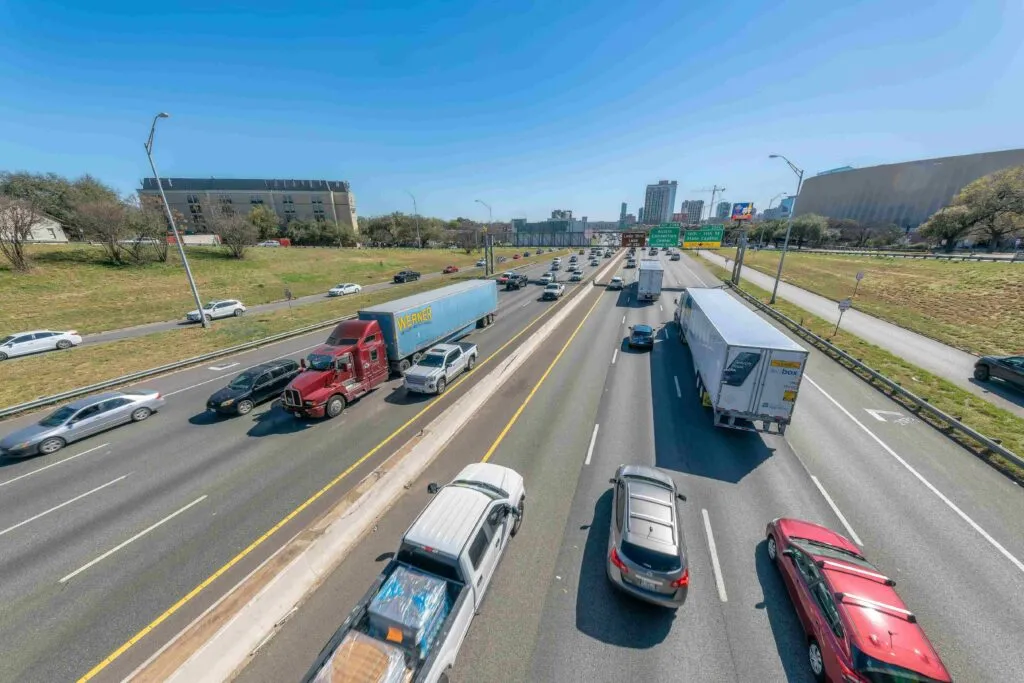
Most of these locations combine heavy traffic, wide crossings, and aging equipment, leaving very little room for a single driver’s mistake.
Aging Traffic Signals
The Vision Zero briefing Dallas presented to City Council in March 2024 counted 1,008 signalized intersections on the High Injury Network, and 673 of those signals were 25 years old or older. That is one reason the city has used federal highway safety grants to rebuild signals at high-injury locations.
Left Turns and Red Lights
In the city’s 2015-2019 crash analysis, left-turn crashes and red-light running were each tied to about 10% of severe crashes. Texas law generally requires a driver turning left to yield to oncoming traffic, but a driver who runs the light or speeds through the intersection can still share the blame or carry most of it.
Speed and People on Foot
Speeding remains the leading cause of deadly crashes in Dallas, according to the city’s latest figures. In that same 2015-2019 analysis, crashes involving pedestrians made up 36% of severe crashes, which is why so much of the new work focuses on crosswalks, beacons, and bus stop placement.
What Should You Do After a Crash at One of These Intersections?
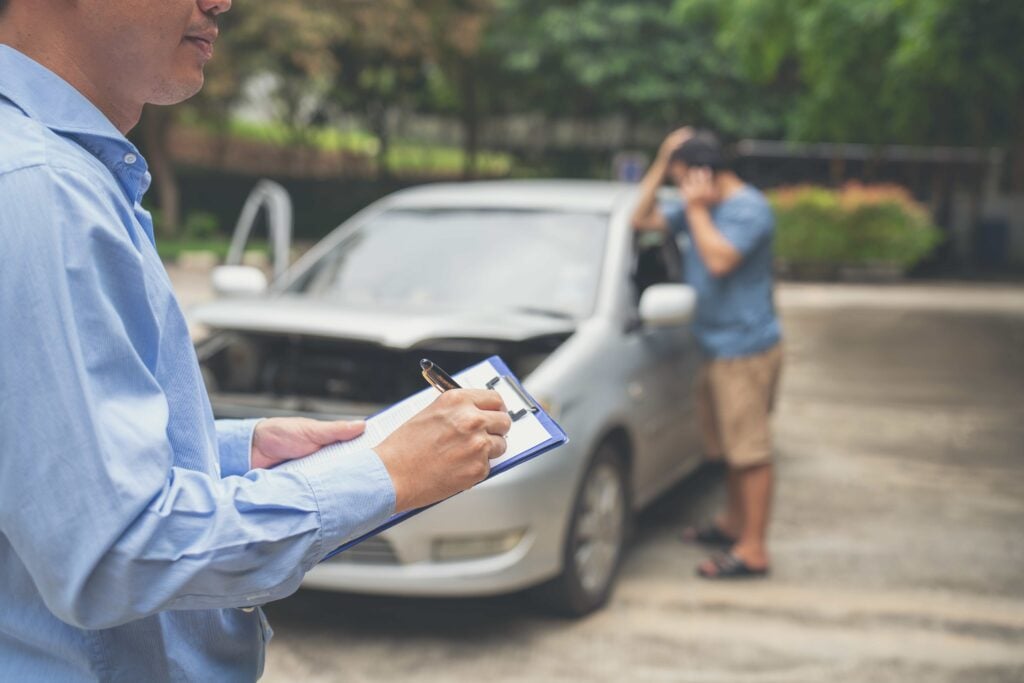
Get medical care, get a police report, and lock down evidence about the intersection before it changes or disappears. If you are able, take these steps in roughly this order:
- Call 911 and ask for police. An officer who investigates a crash involving injury, death, or apparent damage of $1,000 or more must send a report to TxDOT within 10 days.
- Photograph the intersection, not just the cars: signal heads, lane arrows, stop lines, faded crosswalk paint, and signs blocked by trees or construction barrels.
- Write down which light you had and which lane you were in while the details are fresh.
- Get names and phone numbers from witnesses, including people waiting at bus stops or crosswalks.
- Note every camera nearby, such as gas stations, stores, apartment gates, and DART buses, because footage can be recorded over quickly.
- See a doctor the same day or as soon as you can, even if you feel okay.
- Do not give a recorded statement to the other driver’s insurance company. The adjuster’s job is to pay you as little as possible, and your words can be used to shift blame onto you.
Later, you can buy a copy of the officer’s crash report through TxDOT. Each of these steps protects a different piece of the fault picture, and that is exactly where the intersection itself comes into play.
How Does the Location Affect Proving Fault in a Dallas Intersection Crash?
The design and equipment at an intersection can support or undercut each driver’s version of events, so the location often becomes evidence in its own right. Our attorneys look at evidence such as:
- Signal timing and maintenance records from the city or TxDOT
- Event data recorder downloads showing each vehicle’s speed and braking in the seconds before impact
- Video from businesses, dashcams, doorbell cameras, and transit vehicles
- Physical evidence such as skid marks, debris fields, and where the vehicles came to rest
- Statements from witnesses who saw the light, the turn, or the crosswalk
When that evidence lines up, the insurance company has a much harder time arguing that you caused your own crash.
How Texas Splits Fault
Under the Texas proportionate responsibility statute, you cannot recover damages if you are more than 50% responsible, and any recovery is reduced by your share. Say your damages total $100,000, and the insurer argues you entered the intersection on a late yellow. If a jury puts you at 30% fault, you could recover $70,000. If the insurer convinces the jury you were 51% at fault, you recover nothing.
When a Broken Signal or Road Design Plays a Role
A dark signal, a stuck light, or a missing sign can bring a government entity into the claim, but those claims are narrow and move on a short clock. The Texas Tort Claims Act notice rule gives a governmental unit the right to written notice within six months of the crash, and a city charter can set an even shorter deadline.
Notice is not required if the government already has actual notice of the injury, but it is risky to count on that.
How Long Do You Have to File a Claim After a Dallas Intersection Crash?
Most Texas injury lawsuits must be filed within two years of the crash under the Texas two-year statute of limitations. For a wrongful death claim, the two years start on the date of death. If the injured person is under 18, the clock generally does not start until their 18th birthday, and other exceptions can change the deadline in specific situations.
Why Waiting Hurts Even Inside the Deadline
Dallas is actively rebuilding some of these exact intersections. If a signal, crosswalk, or lane layout changes after your crash, photos and records from before the change may be the only proof of what you faced. Business videos and witness memories fade on a much shorter timeline than two years.
FAQs About the Most Dangerous Intersections in Dallas
These are the questions people in Dallas ask most often about dangerous intersections and the claims that follow a crash at one.
What is the most dangerous road in Dallas?
Loop 12 in southern Dallas has long been one of the deadliest roads in Dallas. After Dallas and TxDOT added crosswalks and signals, lowered speed limits, and increased enforcement, the city reported that fatal crashes on Loop 12 dropped by about half from 2024 to 2025.
How do I get a copy of my Dallas crash report?
You can buy a copy of the Texas Peace Officer’s Crash Report, called the CR-3, through TxDOT’s Crash Report Online Purchase System. Officers must submit the report within 10 days of the crash, and it can take a few more business days before the report is available to buy.
Are there red-light cameras in Dallas?
No. Texas lawmakers banned red-light camera programs in 2019, and Dallas deactivated its cameras. That means proof of who had the light in a Dallas intersection crash usually comes from witnesses, private video, and vehicle data instead.
Who is at fault in a left-turn accident in Texas?
The driver turning left is often found at fault in Texas because that driver generally must yield to oncoming traffic. Fault can shift if the oncoming driver ran a red light, was speeding, or was distracted, and Texas assigns fault by percentage, so both drivers can share it.
Can I sue the City of Dallas if a broken traffic light caused my crash?
Possibly, but claims against the City of Dallas are limited by the Texas Tort Claims Act and require written notice within six months, or sooner if the city charter sets a shorter deadline. Because these claims turn on strict procedures, it helps to act within days of the crash.
Talk With Our Attorneys About Your Dallas Intersection Crash
A crash at a dangerous Dallas intersection should not turn into a fight you handle alone while you recover. Tate Law Offices, PC represents people hurt in car crashes across Dallas-Fort Worth from our Dallas office at 13355 Noel Rd #1167, and we handle the evidence, the insurance company, and the deadlines so you can focus on getting better.
There is no fee unless you collect, and we are available 24/7. Call (972) 499-4813 to get your free consultation. Every case is different, and results depend on the specific facts of your case. This article is general information, not legal advice.
